

Configuring Management operations tasks
- 05 Aug 2026
- 3 Minutes to read
- Print
- DarkLight
- Download PDF
Configuring Management operations tasks
- Updated on 05 Aug 2026
- 3 Minutes to read
- Print
- DarkLight
- Download PDF
Article summary
Did you find this summary helpful?
Thank you for your feedback!
Overview
Management operations is an automated task type in Business Applications that updates the runtime state of associated Azure resources on a schedule. You can use it to start, stop, enable, or disable supported resource types automatically, without switching to the Azure portal.
Business value
Manually managing the state of Azure resources across environments is time-consuming and error-prone. Management operations let you automate scheduled state changes — such as stopping non-production resources overnight or enabling resources before business hours — reducing operational overhead and Azure spend.
How it works
Management operations work by targeting one or more resources of a supported type and applying a specified state change (for example, stopping a Logic App or disabling a Service Bus Queue) at a scheduled time. You define the resource type, the desired target state, and the set of resources to act on. The task runs on the configured schedule and notifies you of the outcome.
The following resource types support Management operations automated tasks:
- API App
- APIM Product
- Azure Function
- Azure Function App
- Databricks Compute Cluster
- Databricks Delta Live Table
- Event Hub
- Kubernetes Service
- Logic App
- Logic App (Standard)
- Logic App Workflow
- Service Bus Queue
- Service Bus Topic
- Service Bus Topic Subscription
- Virtual Machine
- Web App
- Web Jobs
Steps
Use the following steps to configure a Management operations task. Navigate to Business Applications > Automated tasks > New configuration to get started.
Configure the resource state change
Configuring the resource state change defines which resources the task targets and what state it applies when it executes.
- Select Management operations from the New configuration dropdown.
- Select the resource type you want to manage.
- Select the state to be set from the dropdown options.
- Select the resources for which the state should be updated.
Enable Run task once immediately after saving if you want the task to execute once immediately at save time, in addition to running on its configured schedule.
- Click Next.
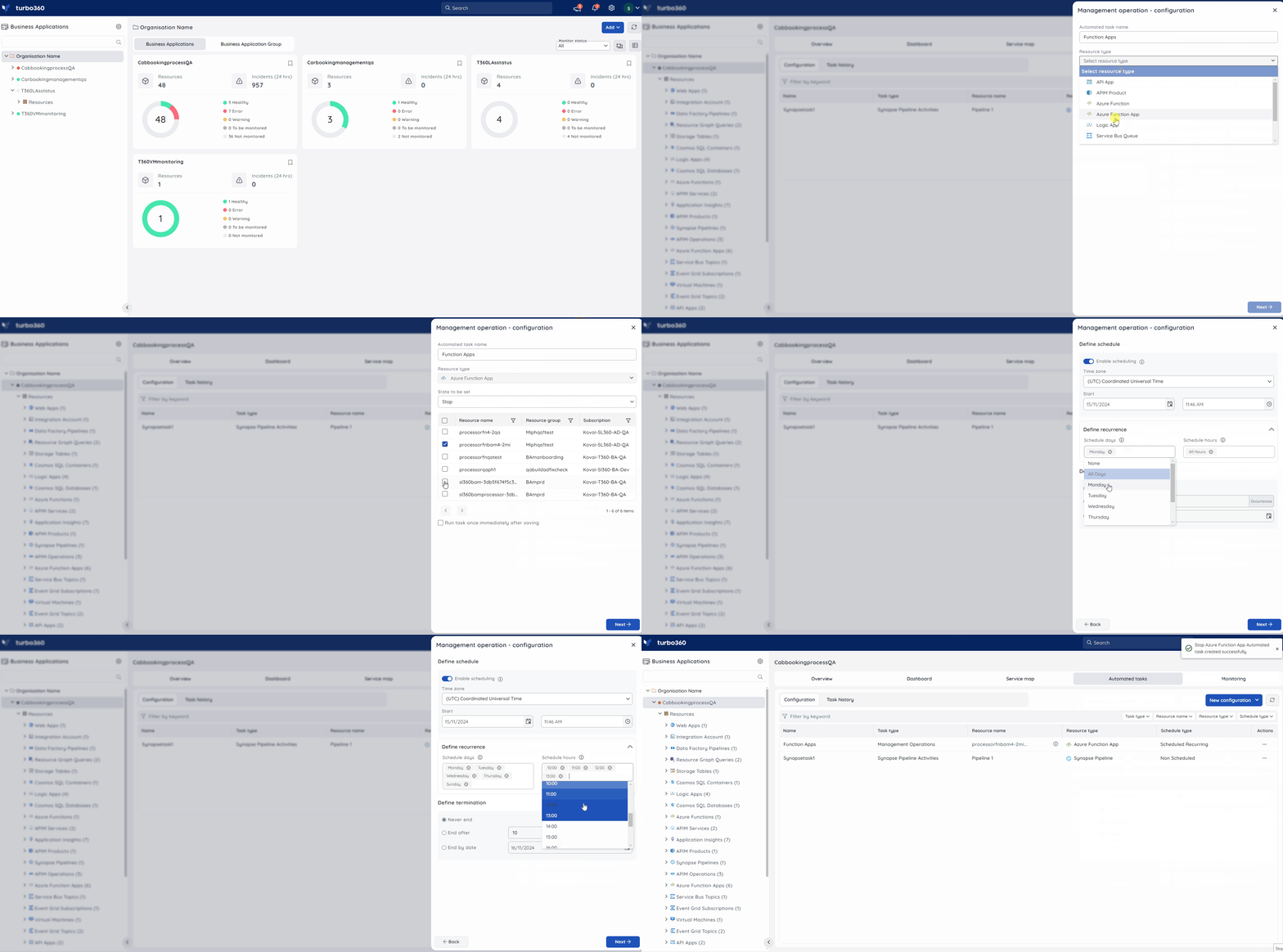
Schedule the task
Scheduling controls when the automated task runs and whether it repeats.
- Configure the recurrence schedule for the task.
- Enable the task to activate it.
- Click Next.
Alert configuration
Notification settings control which channels and recipients receive alerts when the task completes or fails.
- Select the notification channels you want to use.
- Enter one or more email addresses to receive notifications.
- Under Advanced settings, enable either or both of the following options as required:
- Send alerts only when the automated task fails — notifications are sent only when the task itself fails to execute.
- Send alerts only when the completed count is greater than 0 — notifications are sent only when at least one resource state was successfully updated.
- Click Save.
When both Advanced settings options are enabled, you receive a notification if the task fails or if at least one resource state was successfully updated.
Troubleshooting
Resource state is not updated after the task runs
Cause: The resource type selected does not support the target state, or the resource is locked by another process.
Fix: Verify the state is valid for the selected resource type. Check the Azure portal for any resource locks or policy restrictions that may prevent state changes.The task runs but notifications are not received
Cause: No notification channels are configured, or the Advanced settings filters exclude the current task result.
Fix: Confirm at least one notification channel is selected. If Advanced settings are enabled, verify that the task outcome matches the configured filter conditions.The task does not run immediately after saving
Cause: The Run task once immediately after saving option was not enabled during configuration.
Fix: Edit the task and enable Run task once immediately after saving. The immediate execution only occurs at save time and cannot be triggered retroactively.The desired resource type is not available in the dropdown
Cause: The resource has not been associated with the Business Application, or the resource type is not supported by Management operations.
Fix: Verify that the resource is associated with the Business Application. Confirm the resource type appears in the supported resource types list above.The task completes but no resources are updated
Cause: The selected resources are already in the target state, or resource selection was not completed during configuration.
Fix: Verify the current state of the targeted resources in the Azure portal. Edit the task to confirm the resource selection is complete and the target state differs from the current state.
Related articles
Was this article helpful?